
Kubernetes powered PaaS that runs in your own cloud. https://porter.run
 Alexander Belanger
76aacb7873
pass db conf from cmd app
Alexander Belanger
76aacb7873
pass db conf from cmd app
|
5 éve | |
|---|---|---|
| .github | 427b92968f docker login to hub from workflow | 5 éve |
| cli | 90dd826c87 gcr w/ server url and docker configure | 5 éve |
| cmd | cb76165987 pass db conf from cmd app | 5 éve |
| dashboard | 695e12b4a4 show project page on provision error when reloading | 5 éve |
| docker | f1ac0e4b69 cli major update | 5 éve |
| docs | ff17b95702 Create GCR.md | 5 éve |
| internal | 095343e947 use pg password for provisioner | 5 éve |
| scripts | e51a889bd1 update docs | 5 éve |
| server | 76aacb7873 pass db conf from cmd app | 5 éve |
| .air.toml | f1ac0e4b69 cli major update | 5 éve |
| .dockerignore | d7b83fb445 onboarding with default sqlite | 5 éve |
| .gitignore | 507ba65d39 delete tf directory | 5 éve |
| LICENSE | 1f483861ca add MIT license | 5 éve |
| README.md | 8573bf525b Update README.md | 5 éve |
| docker-compose.dev.yaml | a5c69a1bda stream ephemeral provisioning logs (no XACK) | 5 éve |
| go.mod | 5b31d66389 fix ctty issue | 5 éve |
| go.sum | 095343e947 use pg password for provisioner | 5 éve |
| prov.yaml | 696a286842 set up buildx in ci | 5 éve |
README.md
Porter

Porter is a Kubernetes-powered PaaS that runs in your own cloud provider. Porter brings the Heroku experience to Kubernetes without compromising its flexibility. Get started on Porter without the overhead of DevOps and fully customize your infra later when you need to.

Why Porter?
A PaaS that grows with your applications
Traditional PaaS's like Heroku are great at minimizing unnecessary DevOps work but don't offer enough flexibility as your applications scale. Custom network rules, resource constraints, and cost are common reasons developers move their application off Heroku beyond a certain scale.
Porter brings the simplicity of traditional PaaS's to your own cloud provider while preserving the configurability of Kubernetes. It's built on top of a popular Kubernetes framework called Helm and is compatible with standard Kubernetes management tools like kubectl, preparing your infra for mature DevOps work from day 1.
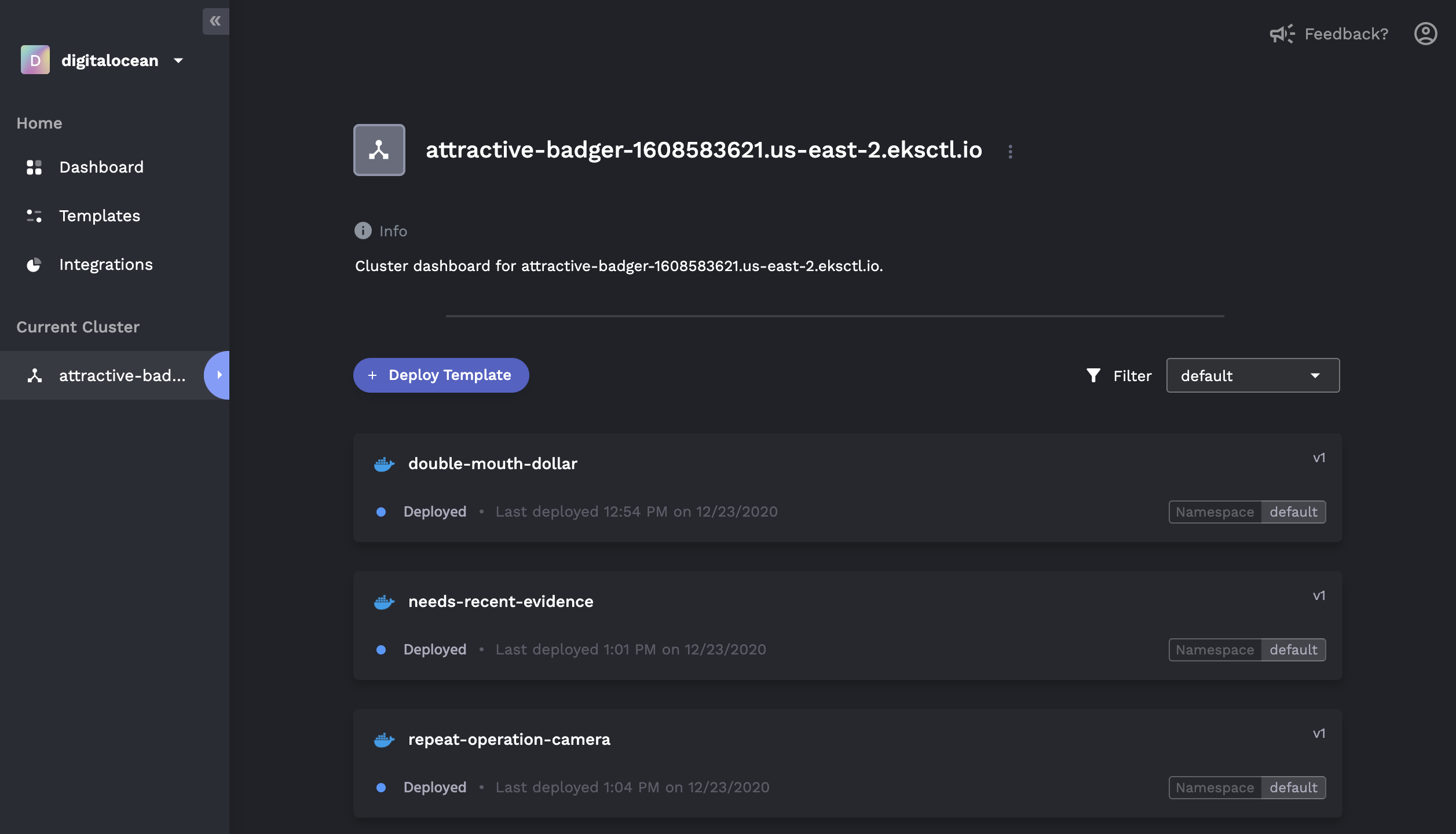
Features
Basics
One-click provisioning of a Kubernetes cluster in your own cloud console
- ✅ AWS
- 🚧 GCP
- 🚧 Digital Ocean
Simple deploy of any public or private Docker image
Heroku-like GUI to monitor application status, logs, and history
Marketplace for 1-click add-on's (e.g. MongoDB, Redis, PostgreSQL)
Application rollback to previous deploy versions
Native CI/CD with buildpacks (Coming Soon)
DevOps Mode
For those who are familiar with Kubernetes and Helm:
Visualize, deploy and configure Helm charts via the GUI
User-generated form overlays for managing
values.yamlIn-depth view of releases, including revision histories and component graphs
Rollback/update of existing releases, including editing of raw
values.yamlConnect to existing Kubernetes clusters that are not provisioned by Porter

CLI Installation
Mac
Run the following command to grab the latest binary:
{
name=$(curl -s https://api.github.com/repos/porter-dev/porter/releases/latest | grep "browser_download_url.*porter_.*_Darwin_x86_64\.zip" | cut -d ":" -f 2,3 | tr -d \")
name=$(basename $name)
curl -L https://github.com/porter-dev/porter/releases/latest/download/$name --output $name
unzip -a $name
rm $name
}
Then move the file into your bin:
chmod +x ./porter
sudo mv ./porter /usr/local/bin/porter
For Linux and Windows installation, see our Docs.
Getting Started
Sign up and log into Porter Dashboard.
Create a Project and select a cloud provider you want to provision a Kubernetes cluster in.
Put in your credentials, then Porter will automatically provision a cluster and an image registry in your own cloud account.
Build and push your Docker image to the provisioned registry with the CLI.
From the Templates tab on the Dashboard, select the Docker template. Click on the image you have just pushed, configure the port, then hit deploy.
Want to Help?
We welcome all contributions. Submit an issue or a pull request to help us improve Porter!
